
Understanding Round Bar in Malaysia for Industrial Applications
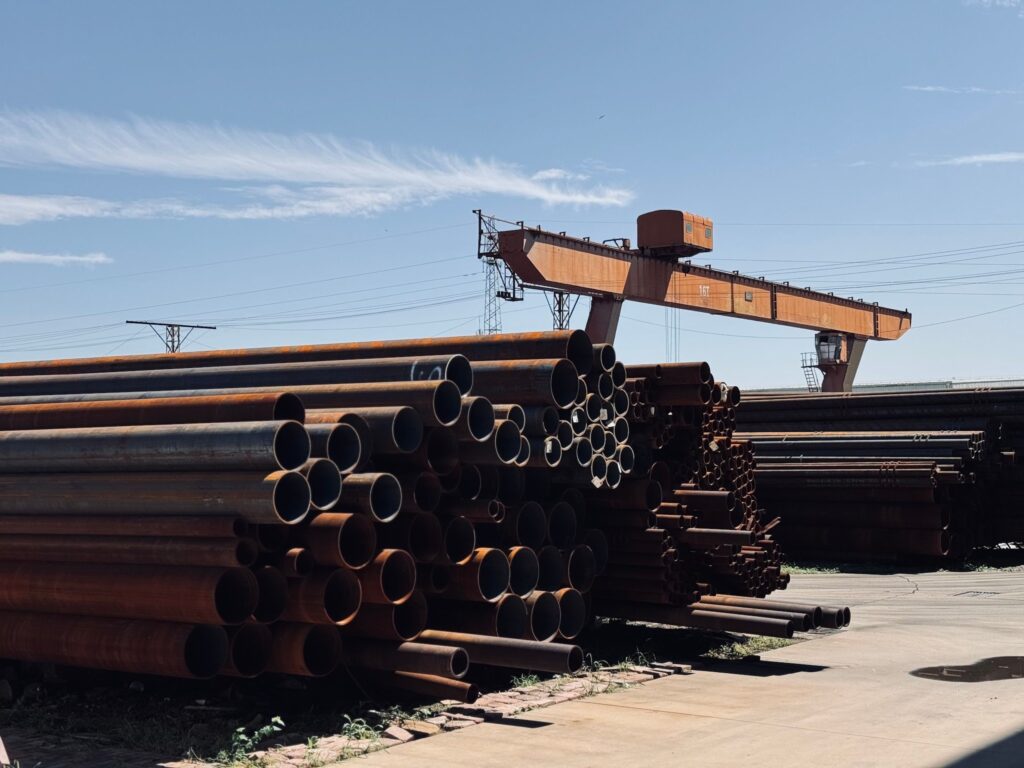
Round bars are solid cylindrical materials widely used across manufacturing, engineering, construction and fabrication. They can serve as raw material for machined components or be incorporated directly into assemblies, depending on their dimensions, material properties and intended application.
When sourcing a round bar in Malaysia, buyers should consider more than diameter and length. Material grade, dimensional tolerance, surface condition and mechanical properties can influence how effectively the bar performs during machining, fabrication and final service.
Common Materials Used for Round Bars
Steel is one of the most familiar materials used for round bars. Carbon steel grades provide different combinations of strength, hardness, ductility and machinability depending on their chemical composition and heat treatment.
Stainless steel round bars are often selected where corrosion resistance is an important requirement. Different stainless steel grades provide varying levels of corrosion resistance, mechanical performance and machinability, so the operating environment should be considered before selection.
Alloy steels are another option for more demanding applications. Elements such as chromium, molybdenum or nickel can be added in particular proportions to modify properties including strength, hardenability, toughness and wear resistance.
Non-ferrous materials such as aluminium and copper alloys may also be supplied in round-bar form for applications requiring properties such as lower weight, electrical conductivity or particular corrosion characteristics.
Diameter, Tolerance and Surface Condition
Nominal diameter alone does not completely describe a round bar. Manufacturing tolerances determine the permitted dimensional variation, which can become particularly important when the material will undergo precision machining.
Surface condition also influences suitability. Hot-rolled bars typically have a different surface finish and dimensional accuracy from cold-finished products. Cold drawing and other finishing processes can produce tighter dimensional control and smoother surfaces for applications requiring greater precision.
Straightness is another practical consideration. A bar that deviates excessively from its intended axis may create difficulties during turning or other machining operations, especially for long components.
These factors should be reviewed when choosing steel materials for manufacturing, particularly where the final component has controlled dimensional specifications.
Why Material Grade Matters
Two bars with identical dimensions can perform very differently if they are produced from different material grades. Chemical composition and heat treatment influence properties such as yield strength, tensile strength, hardness and impact behaviour.
Machinability can also vary. A harder or stronger material is not automatically the most appropriate option if it creates unnecessary machining difficulty for an application that does not require those properties.
Engineers therefore typically evaluate material specifications alongside the mechanical and environmental demands of the finished component.
Typical Uses Across Manufacturing
Applications for round bar in Malaysia can range from relatively straightforward fabricated parts to precision-machined components. Bars may be turned, drilled, milled, threaded or ground to produce shafts, pins, fasteners, rollers, bushings and other machine parts.
Construction and general fabrication can also use round bars for structural or supporting purposes where appropriate specifications are selected.
Purchasing decisions should account for downstream manufacturing as well. Machining allowance, available stock dimensions and required surface finish can affect material utilisation and production efficiency.
Selecting a round bar in Malaysia ultimately requires matching dimensions and material characteristics with the intended application. Reviewing grade, tolerance, surface condition, mechanical properties and processing requirements provides a more reliable basis for choosing suitable round-bar material.